First attempts at film photography
In 2023, I bought a second-hand film camera with the goal of getting back into manual photography, a hobby that I had abandoned sometime before moving to London back in 2017. I grabbed my new Olympus OM-10 and some Kodak UltraMax film, and visited London parks to practise.
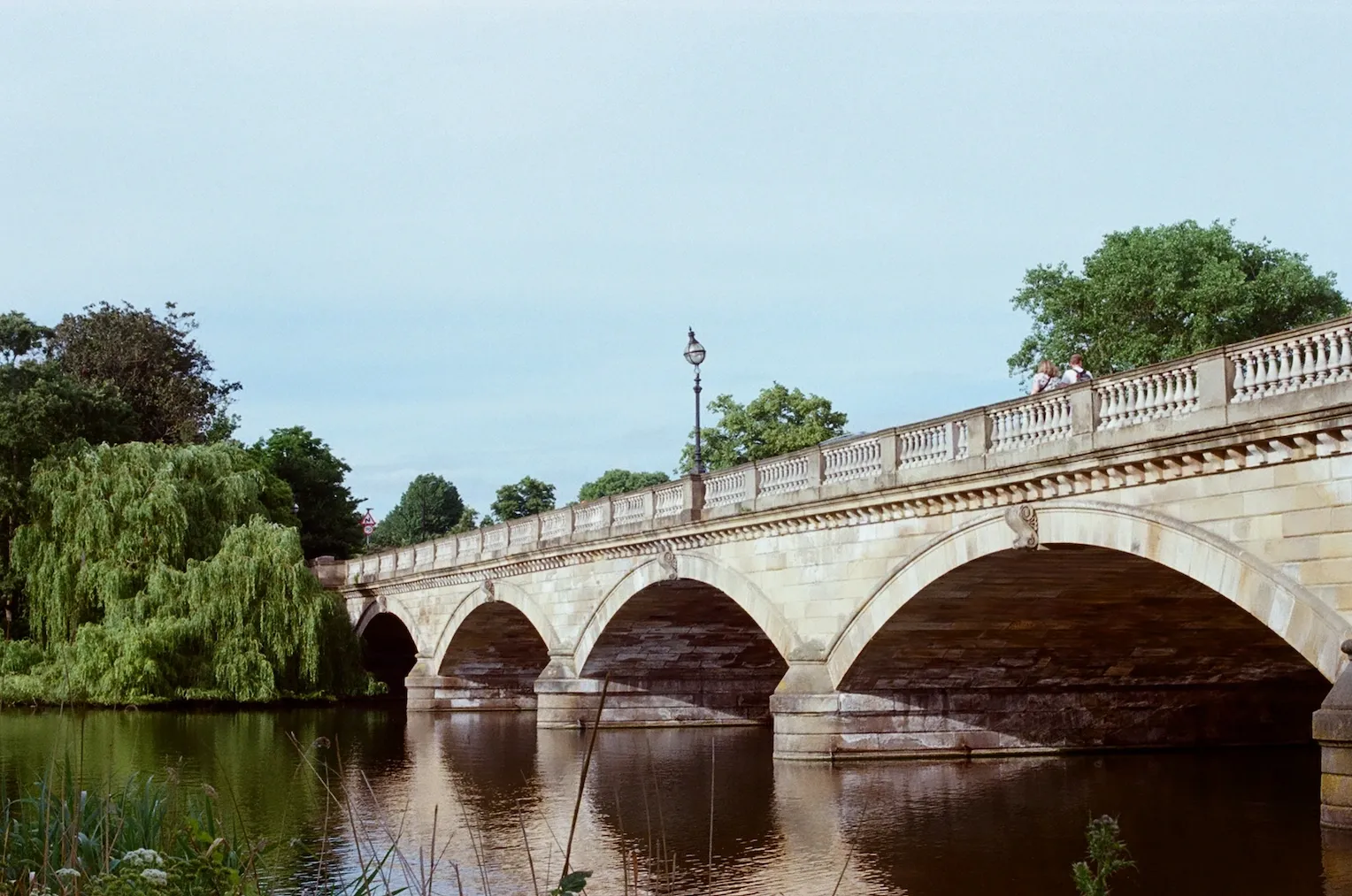
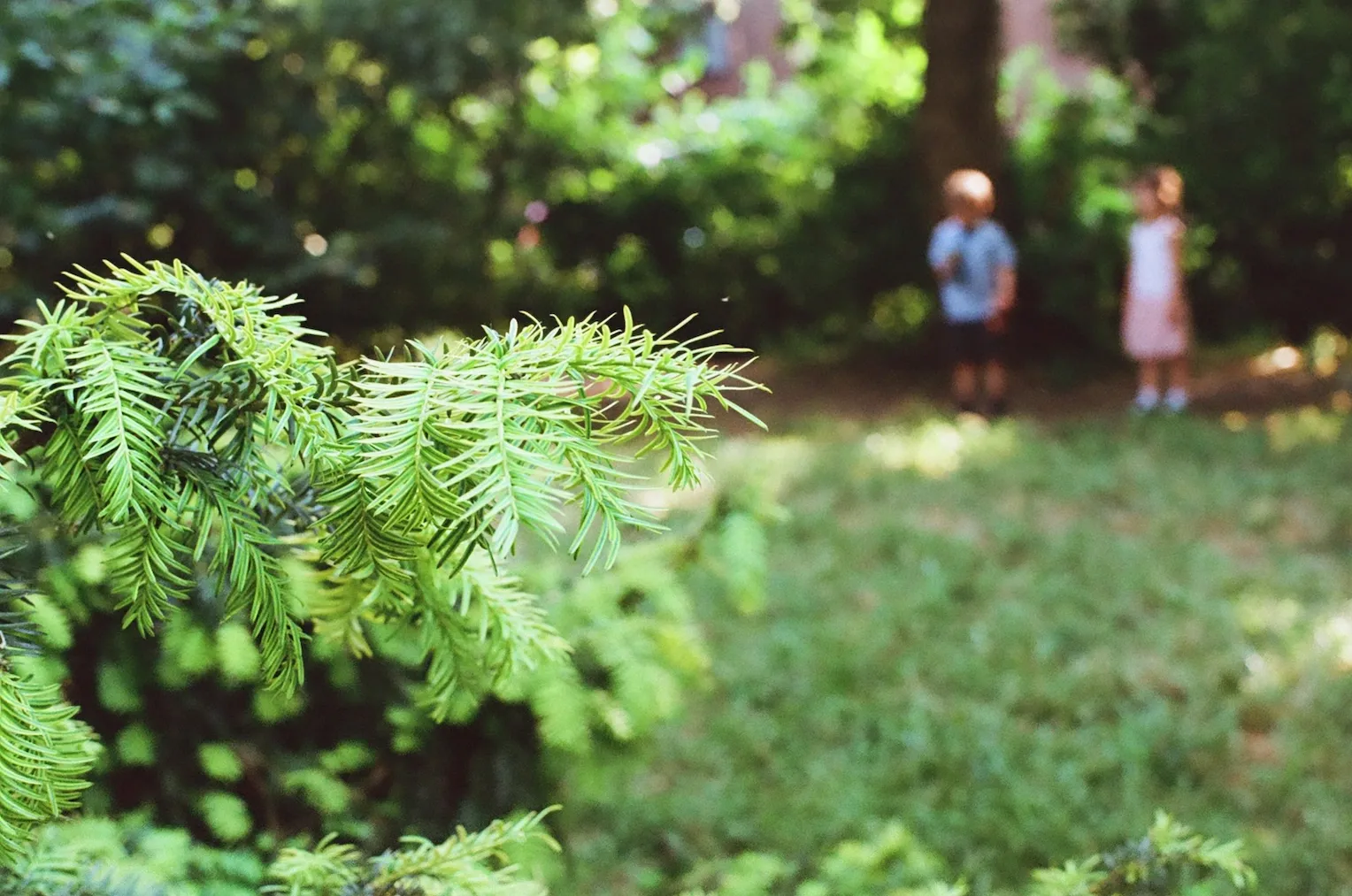
Hyde Park. Ravenscourt Park.
I took some photos I was proud of during that time, but eventually got bored of trees and ponds. Luckily, it wasn’t too long before I got to photograph more interesting subjects.
The long-awaited first trip to Japan
“Long-awaited” doesn’t quite capture the excitement I felt when the plans for a trip to Japan began to take shape. I had been wanting to visit the country since I was about twelve years old, so I spent days researching locations and activities.
There were four of us, each with different interests and levels of knowledge about Japan, so I got to work on a Notion dashboard to gather everyone’s ideas and help us make a plan. (I might write a post on how I did that some other time).
Below is a very condensed itinerary with my favourite photos from each place.
Hectic Tokyo
We spent the first few days in Tokyo, a bit overwhelmed by the fast-moving currents of people in the major train stations, but marvelling at the quietness and cleanliness inside the trains themselves. We hit the classics; Shinjuku, Shibuya, Ginza, Akihabara… We also visited a museum of miniatures, which might have been my favourite.
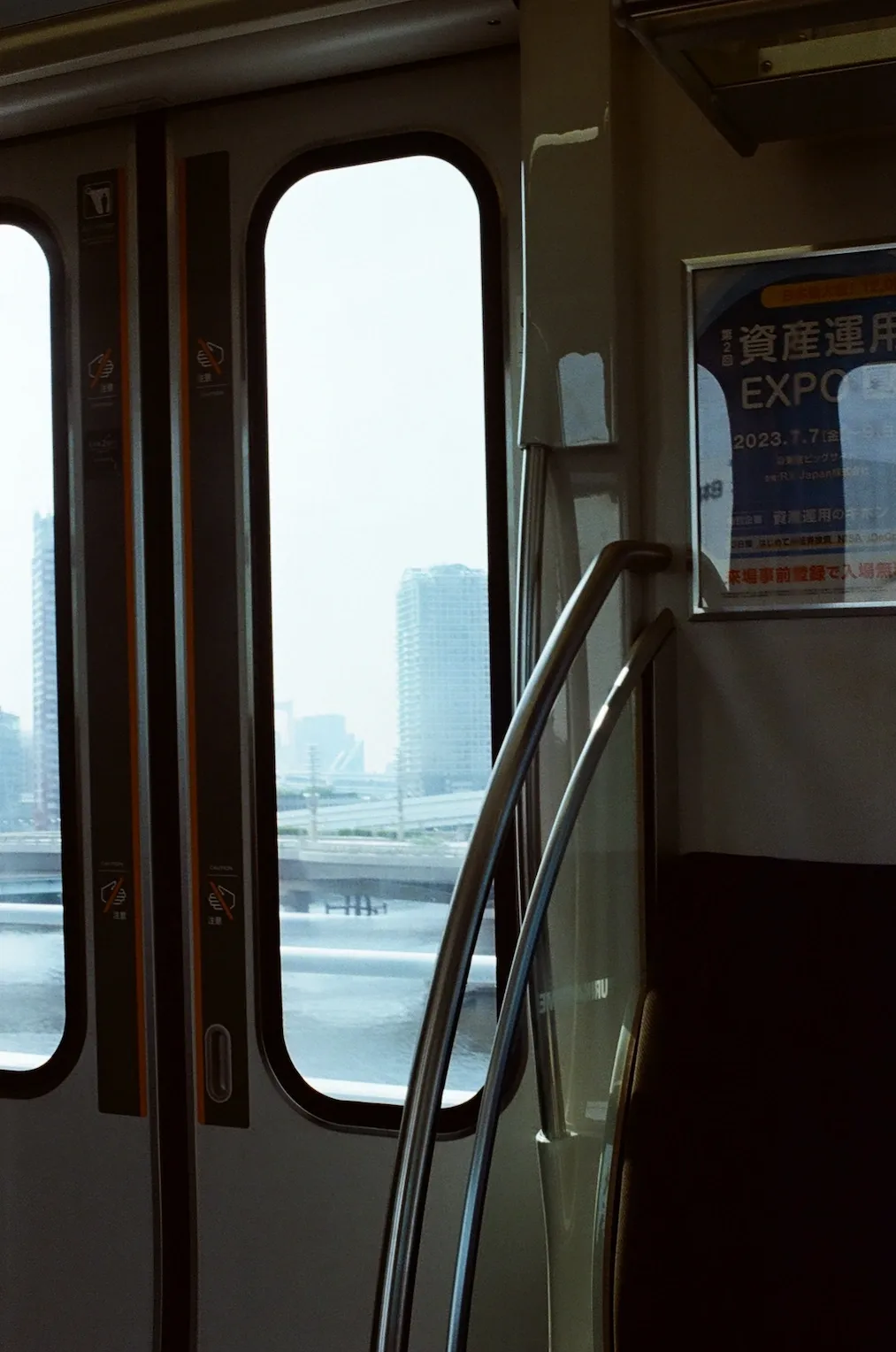
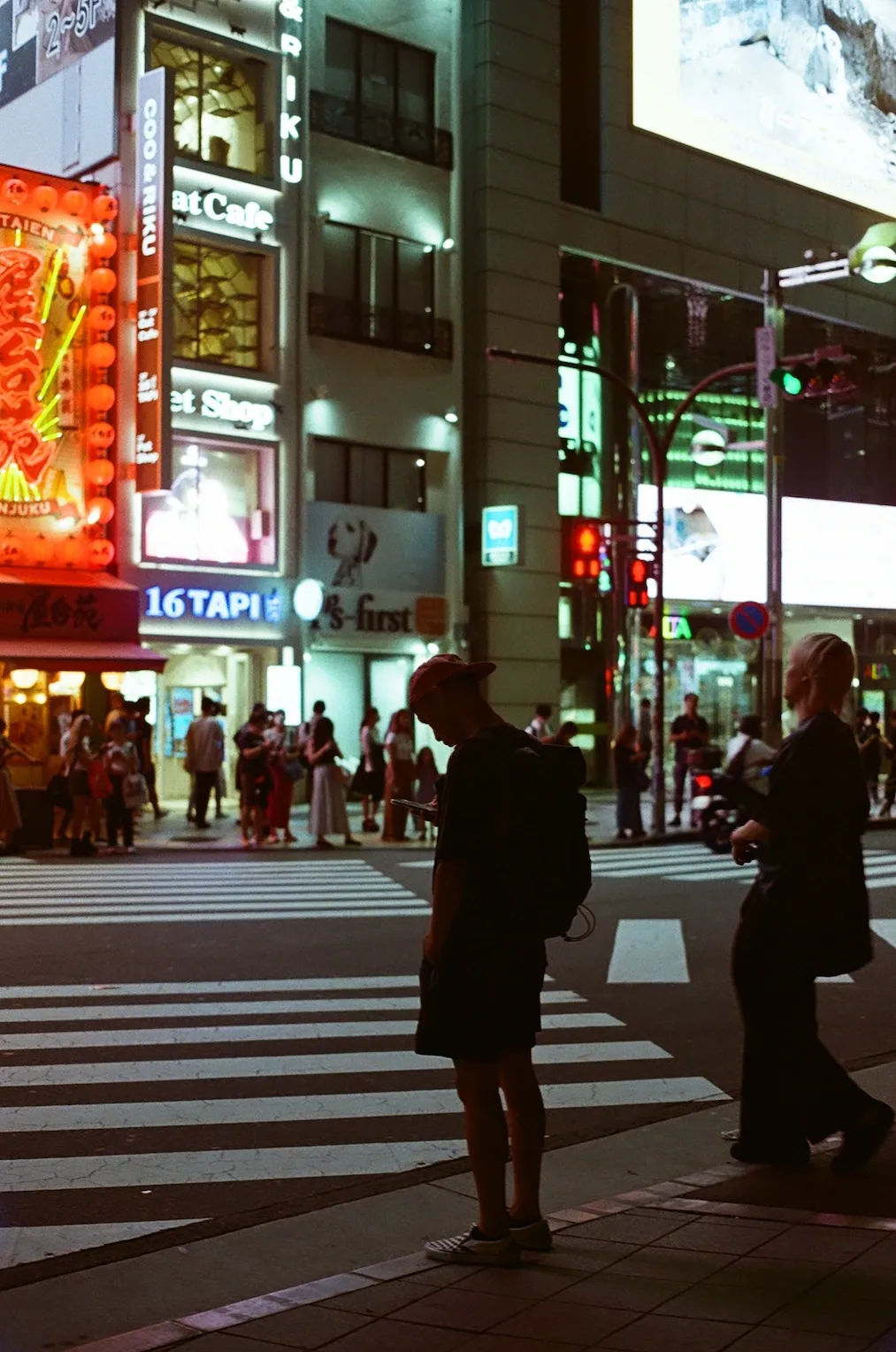
A train in Tokyo. Shinjuku.
Shopping, izakaya alleys, and busy food markets. Tokyo is a lively and exciting place, but the crowds could get a bit exhausting, so we took two half-day trips away from the madness.
Moments of respite
Our first half-day trip was to Nikko, home to the famous red Shinkyo bridge and the opulent Toshogu shrine. We took the walk from the station, using umbrellas to protect ourselves from the intense sun, and ate omurice for lunch at a restaurant owned by an old couple. We exchanged a silly number of bows upon leaving, unsure of when we were meant to stop.
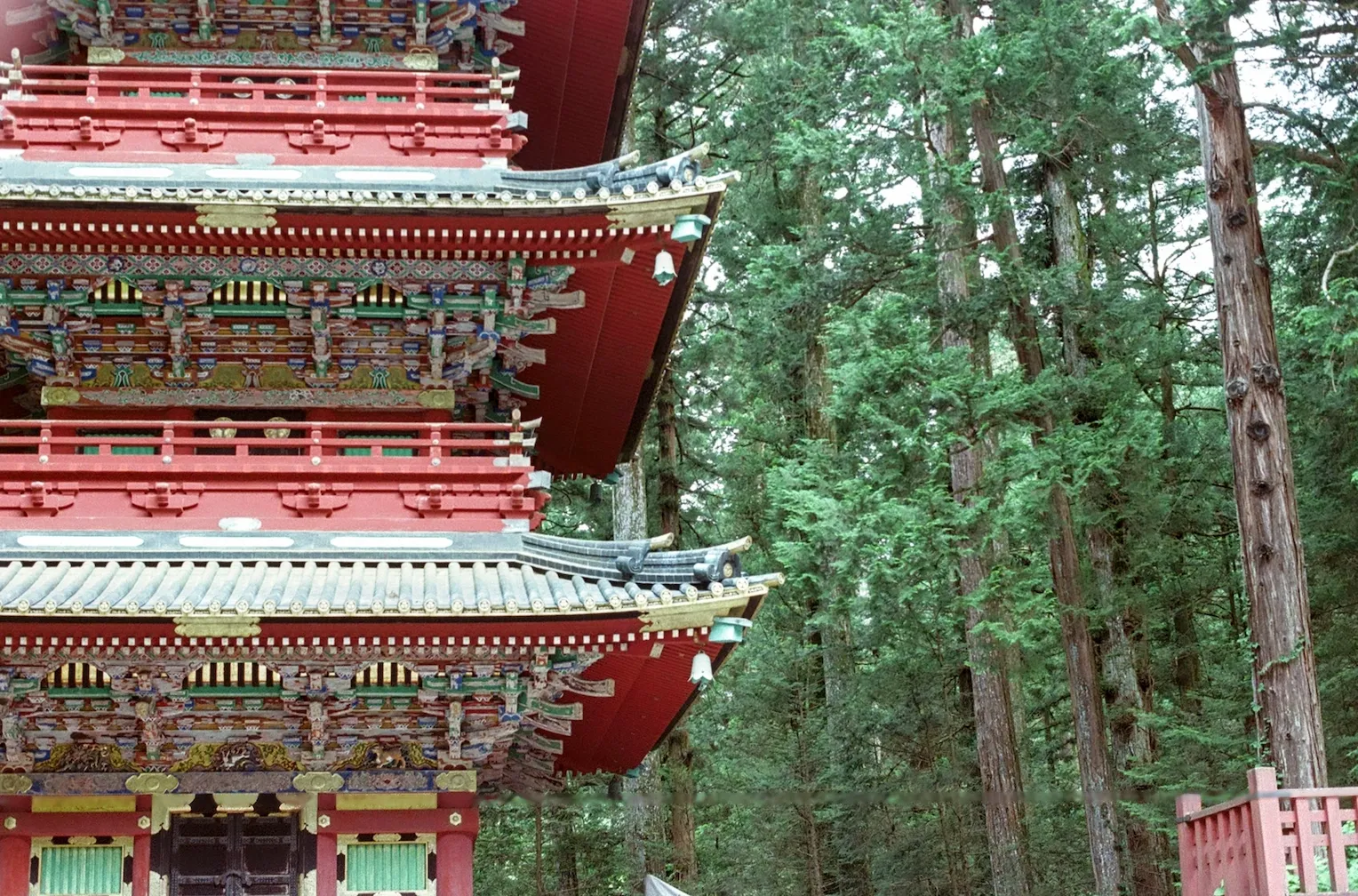
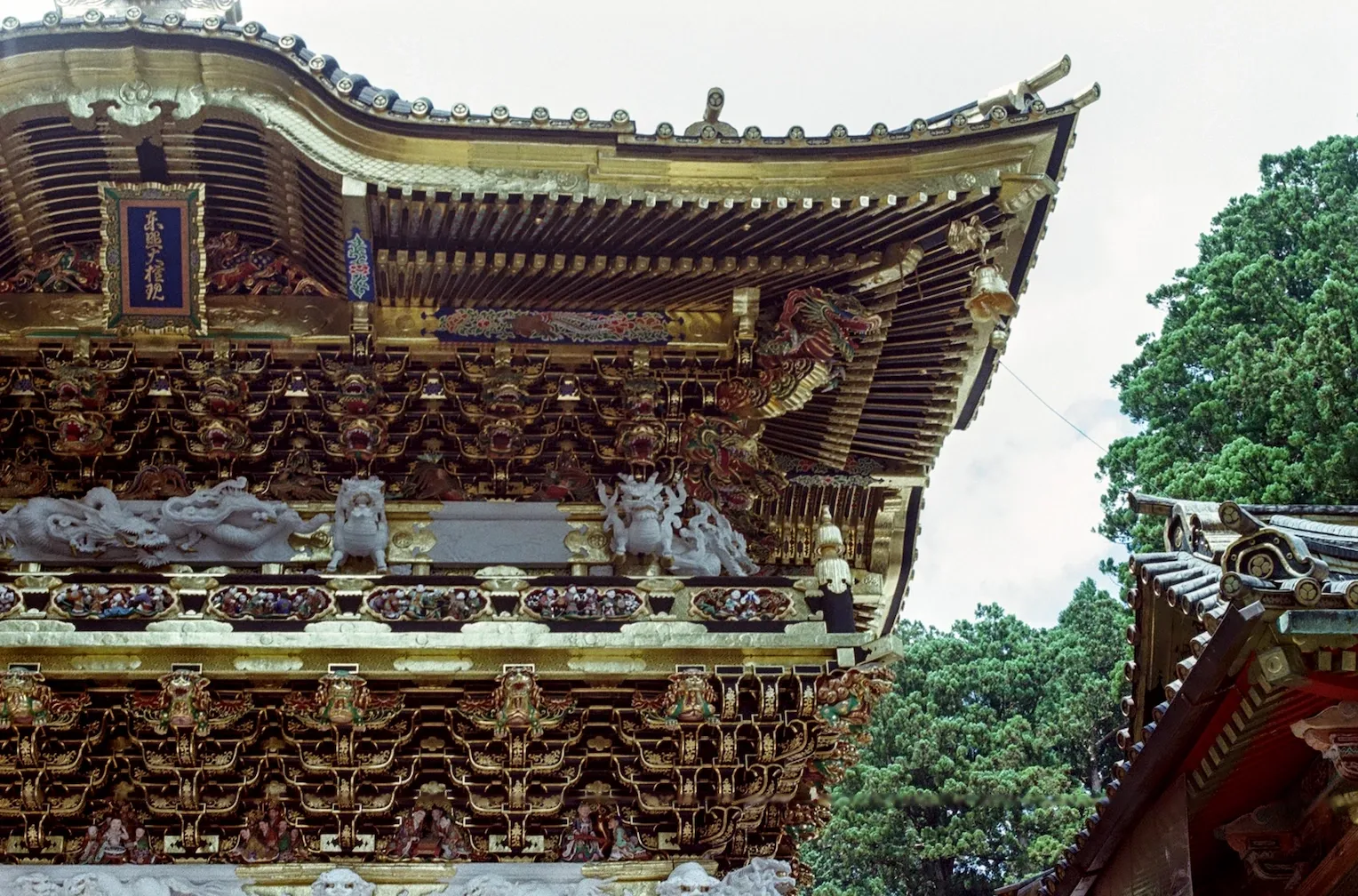
Toshogu shrine in Nikko.
For our second half-day trip, we headed to Ome and paid a visit to Mitakesan, a sacred mountain about three hours from Tokyo. It involved two trains, a bus, and a cablecar. Walking out of the cablecar station and into the village, the busyness of Tokyo streets was easily forgotten. We headed past Musashi Mitake shrine and the initial trail, and the hike began.
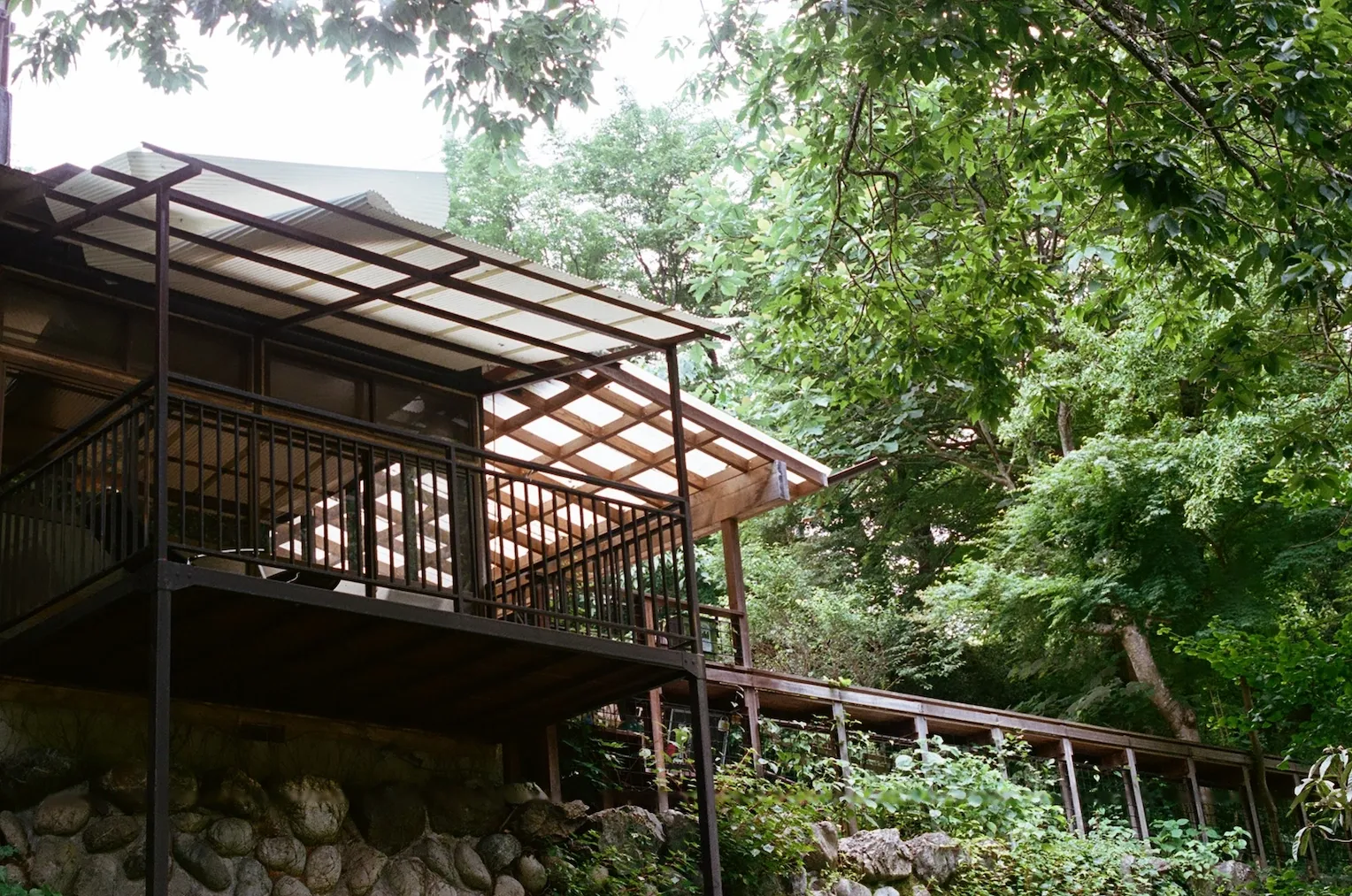
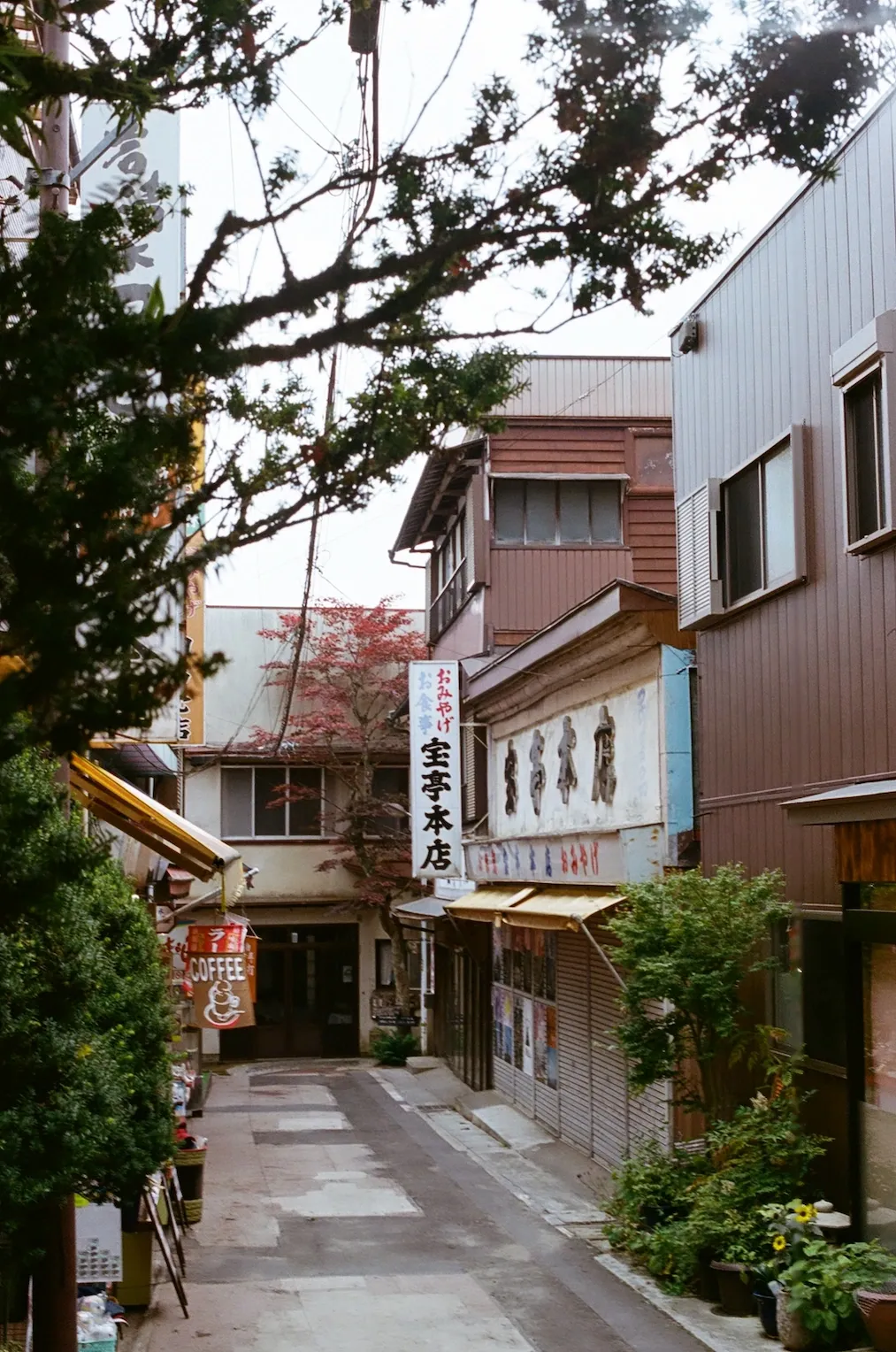
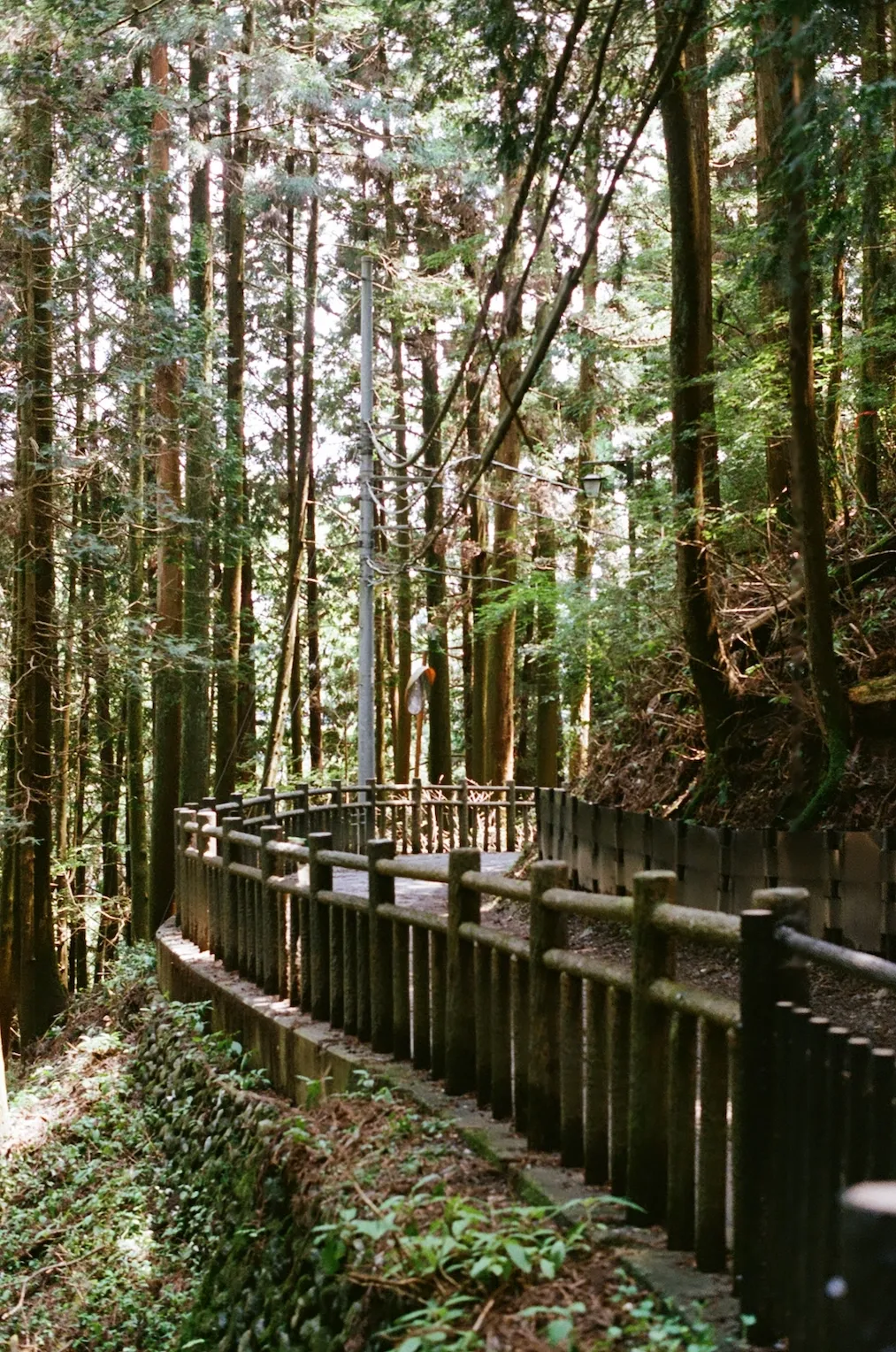
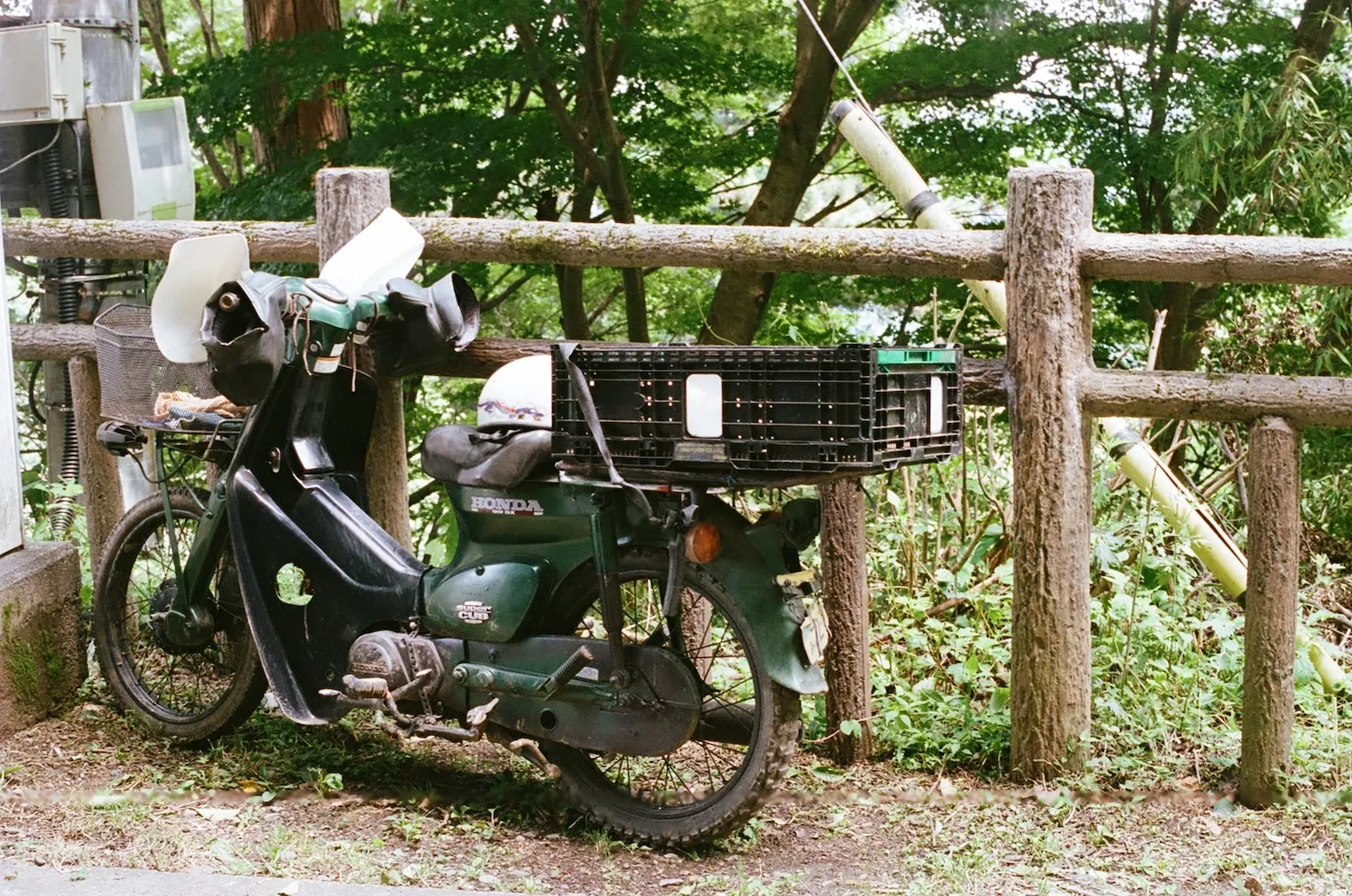
Village near Musashi Mitake shrine. Mitakesan hiking trail.
On our way to a beautiful rock garden, we came across multiple groups of hikers that greeted us with a smile, wishing for us to return safely. None of them looked younger than seventy.
Traditional Kyoto
Traveling during the humid and rainy summer paid off in Kyoto, where we managed to avoid the overcrowding that the city is known for. We picked a direction and started walking, admiring the shrines and temples along the way. The food everywhere in Japan was amazing, but Kyoto offered surprisingly tasty simple meals such as boiled tofu with seasonings, or cold soba noodles with a dipping sauce.
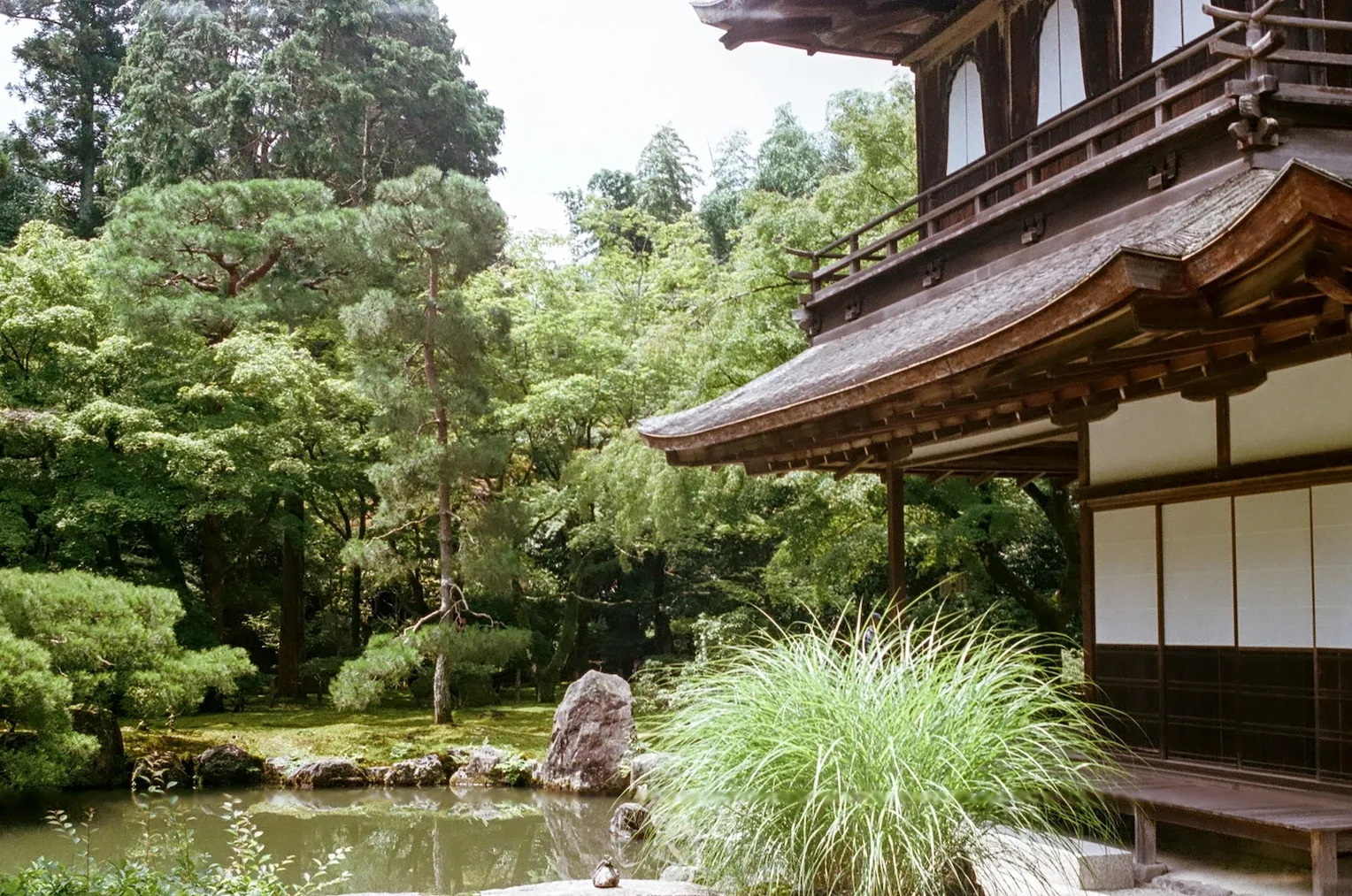
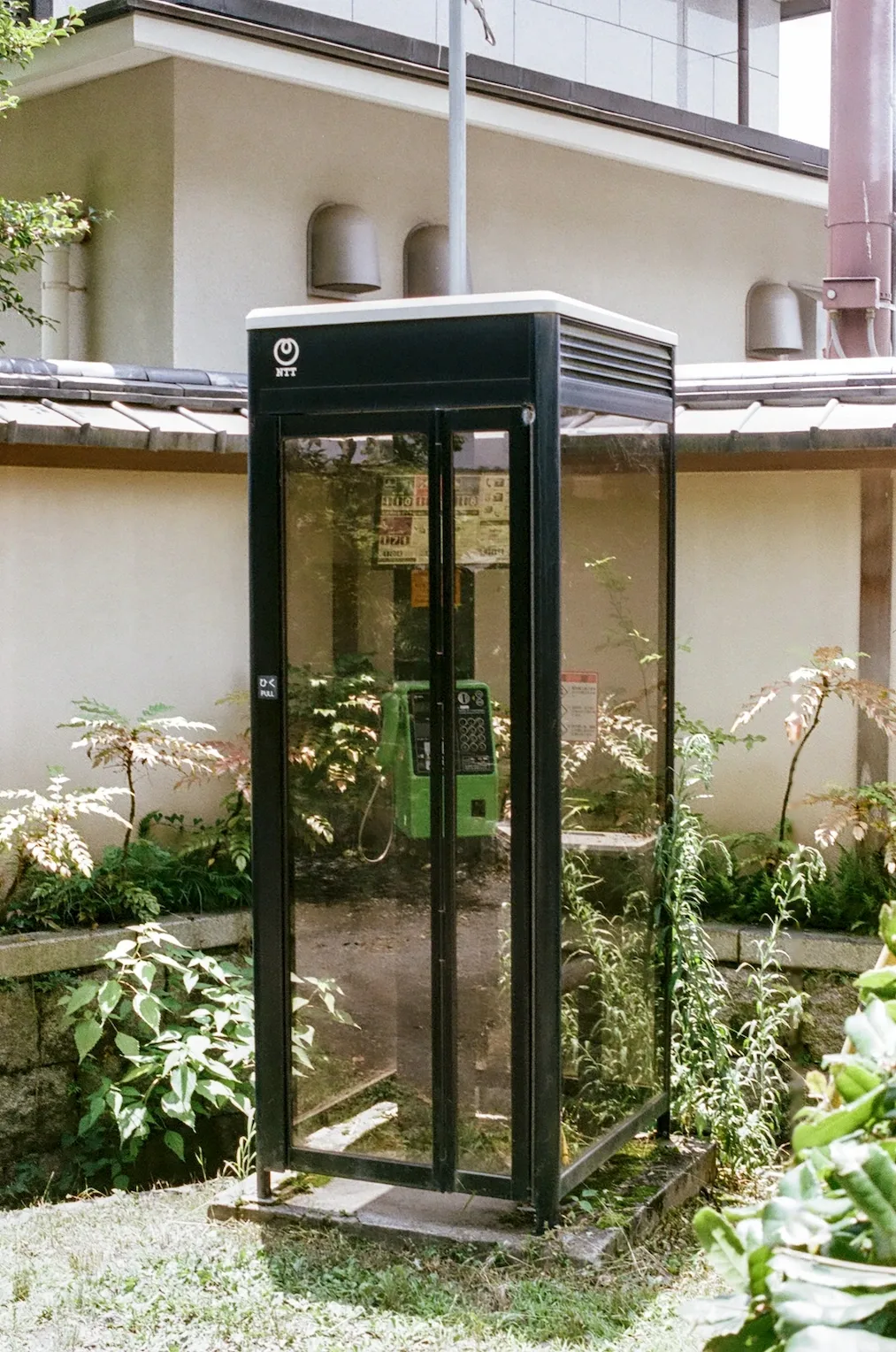
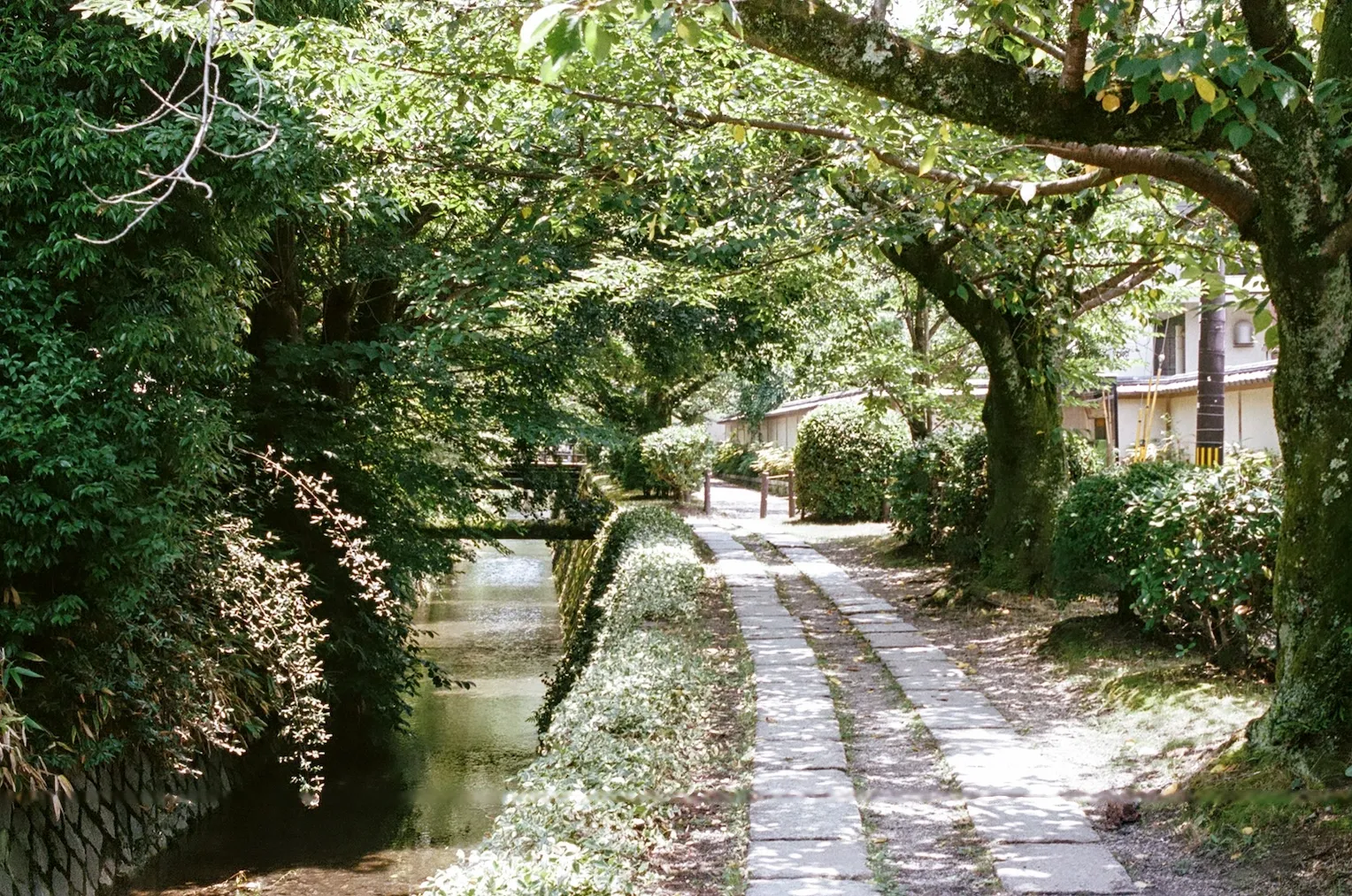
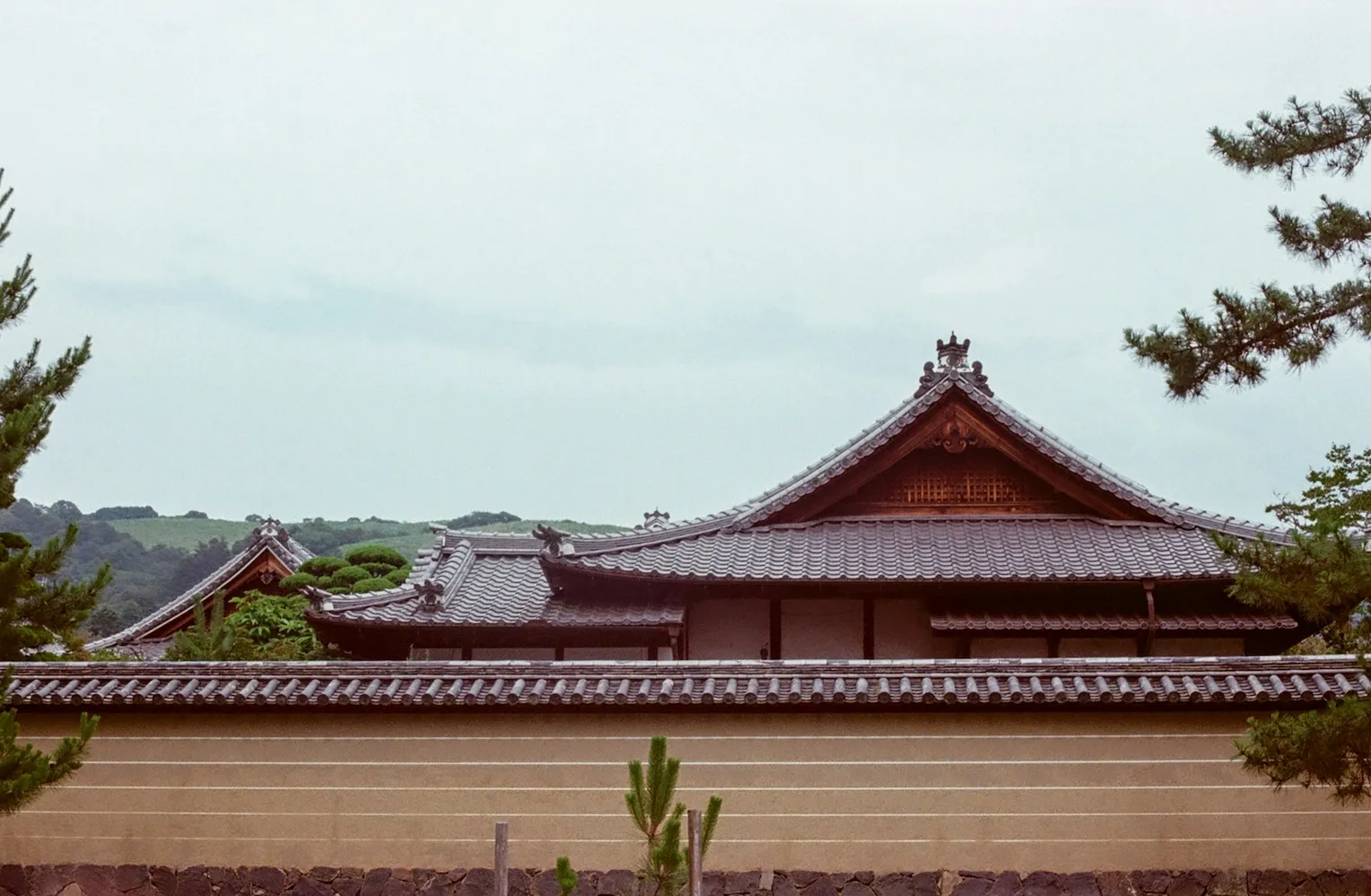
Ginkakuji temple. Philosopher’s Path. Nanzenji temple.
The Fushimi Inari shrine required a short train ride and some patience, as it was busier than other spots. But if you’re lucky, you might come across the resident cats that like to hang out with the kitsune fox statues.
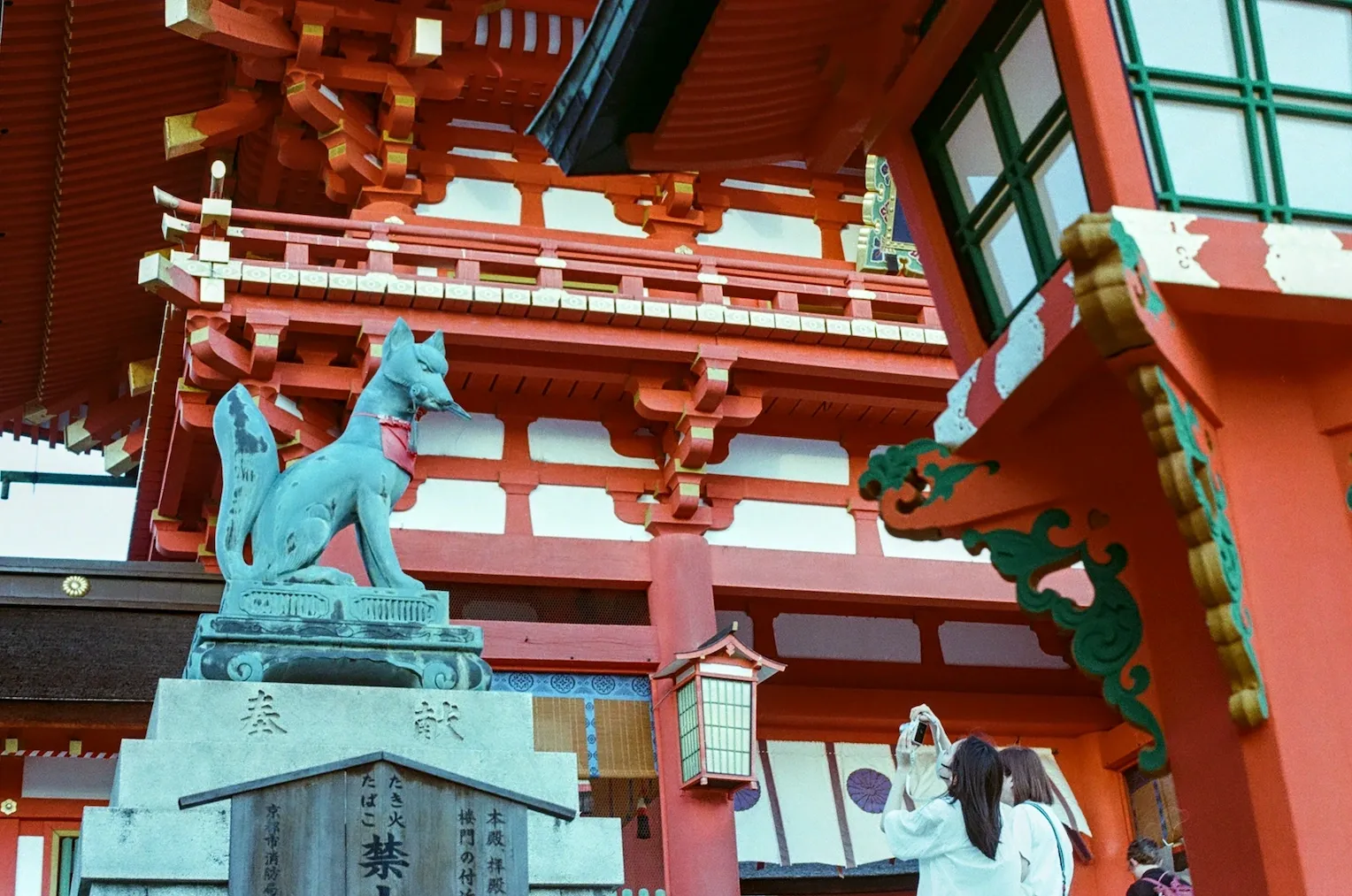
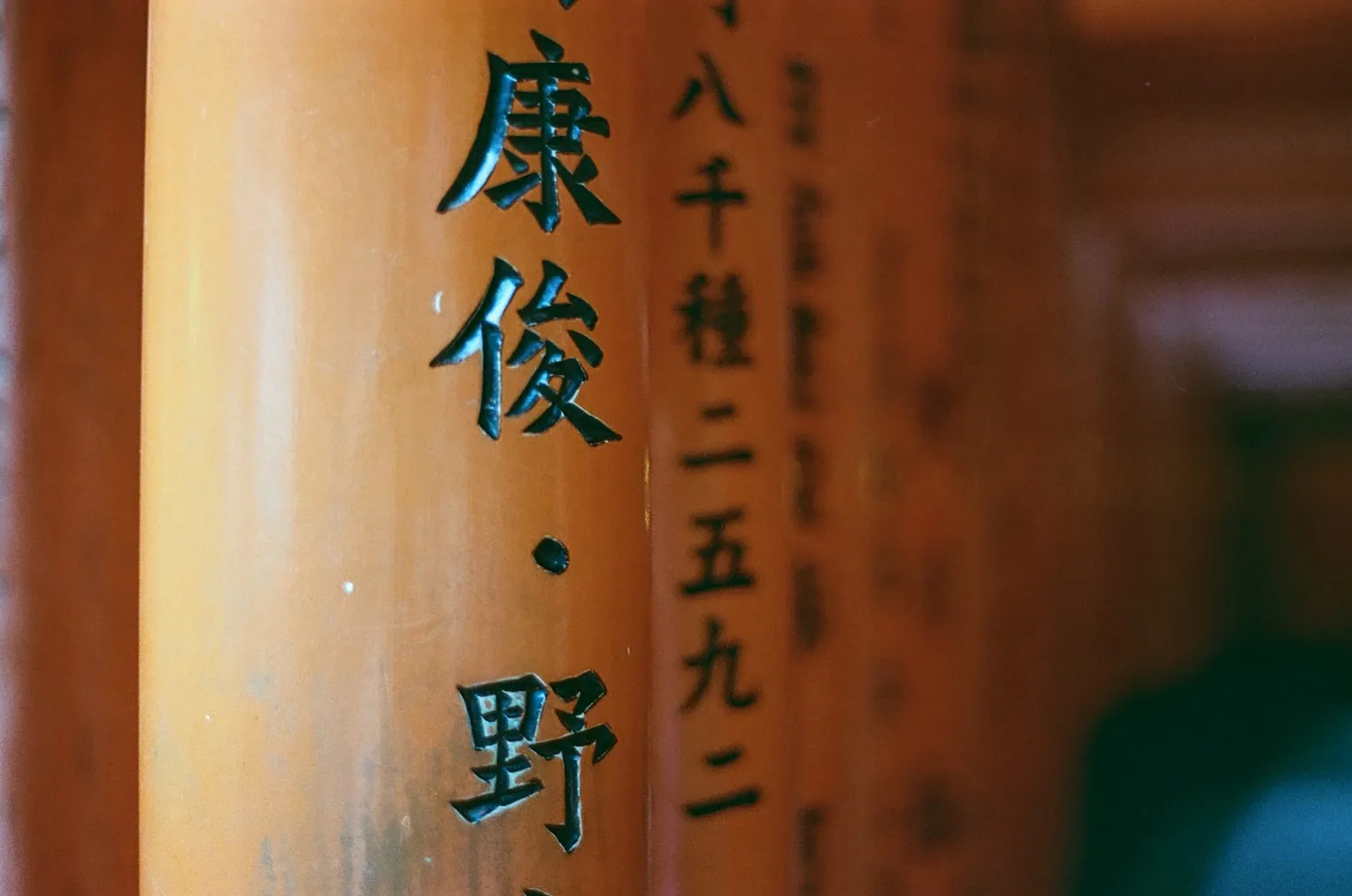
Fushimi Inari shrine.
While staying in Kyoto, we took the local train to Saga-Arashiyama to walk along the scenic bamboo grove. My favourite spot was actually the Adashino Nenbutsuji temple, and the beautiful street that leads to it all the way from the main bamboo grove. Thousands of Bhuddist statues cover the temple grounds, and a much quieter bamboo forest awaits at the end.
We stayed one night at Momijiya Honkan Takao Sansou, a hotel surrounded by nature that served a delicious traditional dinner and breakfast. We also got lucky enough to watch two maiko perform, and speak briefly to them.
Deer-filled Nara
Nara is an easy day trip from Kyoto, only half an hour away. On the way to Nara park, we enjoyed the famous mochi at Nakatanidou. Then we spent a long time befriending the deer, and learned that they will bow at you in exchange for some crackers.
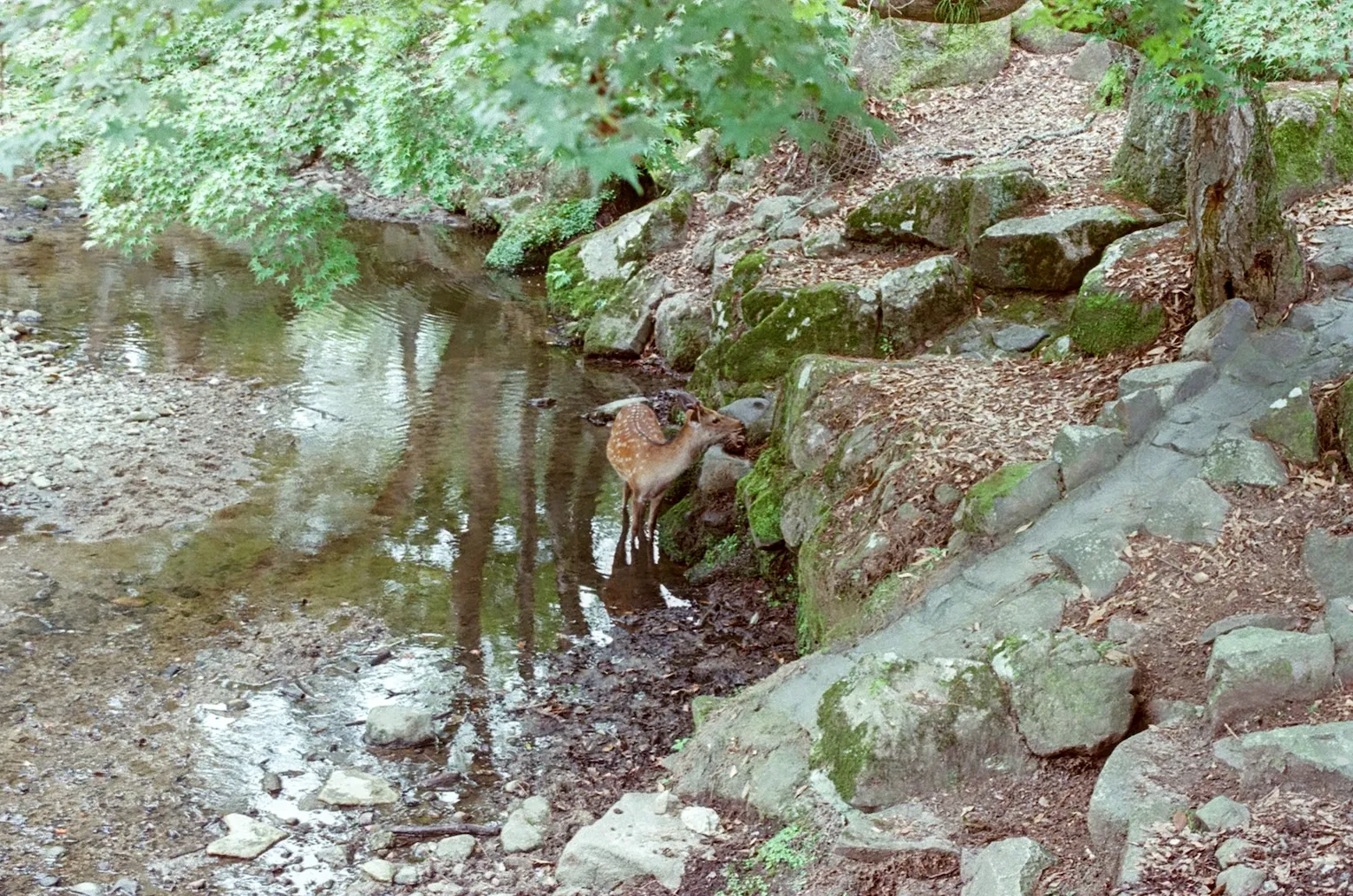
Nara Park.
At Todaiji, a massive temple guarding a 15 meter tall Buddha statue, I was told I’d reach enlightenment in my next life if I squeezed myself through a very narrow hole in one of the main pillars. Apparently, it was the same diameter as the Buddha statue’s nostril. I’m proud to say I managed!
Bustling Osaka
Our visit to Osaka was brief. One of the days was spent in Universal Studios Japan, where we visited Super Nintendo World. I watched my friends take pictures with Mario and Luigi, got a bit too competitive with the rides, and felt like I was a kid again for a few hours.
The rest of the time was spent eating and drinking. Osaka is known for its nightlife and street food, and while there are quite a few tourist traps, it definitely lives up to its reputation. The streets were bustling at night, full of both tourists and locals searching for the right spot to take a bite.
Imposing Himeji
Himeji would have been a beautiful place to visit, had it not been for the torrential rain that forced us to quickly run to the castle when we first got there, and take cover at a library cafe when we were trying to leave. Actually, that last bit was pretty nice. The atmosphere was so cozy that we found it difficult to get going towards our next destination.
Unfortunately, none of the photos I took in Himeji turned out great thanks to the non-stop rain…
Cycling the Shimanami Kaido
Our next stop was Onomichi, a quiet port town. Our objective was the Shimanami Kaido, an expressway that connects a number of islands through impressive bridges. It goes all the way from Onomichi to Imabari, which is at the opposite side of the Seto inland sea. It has become a known spot for cyclists all over the world. I’m no cyclist, but I was determined to try.
We completed about half of the 70 kilometers that make up the route, visiting three of the six islands. We stopped at Ikuchi island, where we took a ferry back to Onomichi for a well-deserved meal. We ended up at Chiichan, a small okonomiyaki restaurant owned by a friendly older woman. Thanks to Google Translate and my limited understanding of Japanese, we had a great conversation about our homes, proper chopstick technique, and learning new languages.
In the Setoda ferry terminal, I took my last and favourite photo of the entire trip.
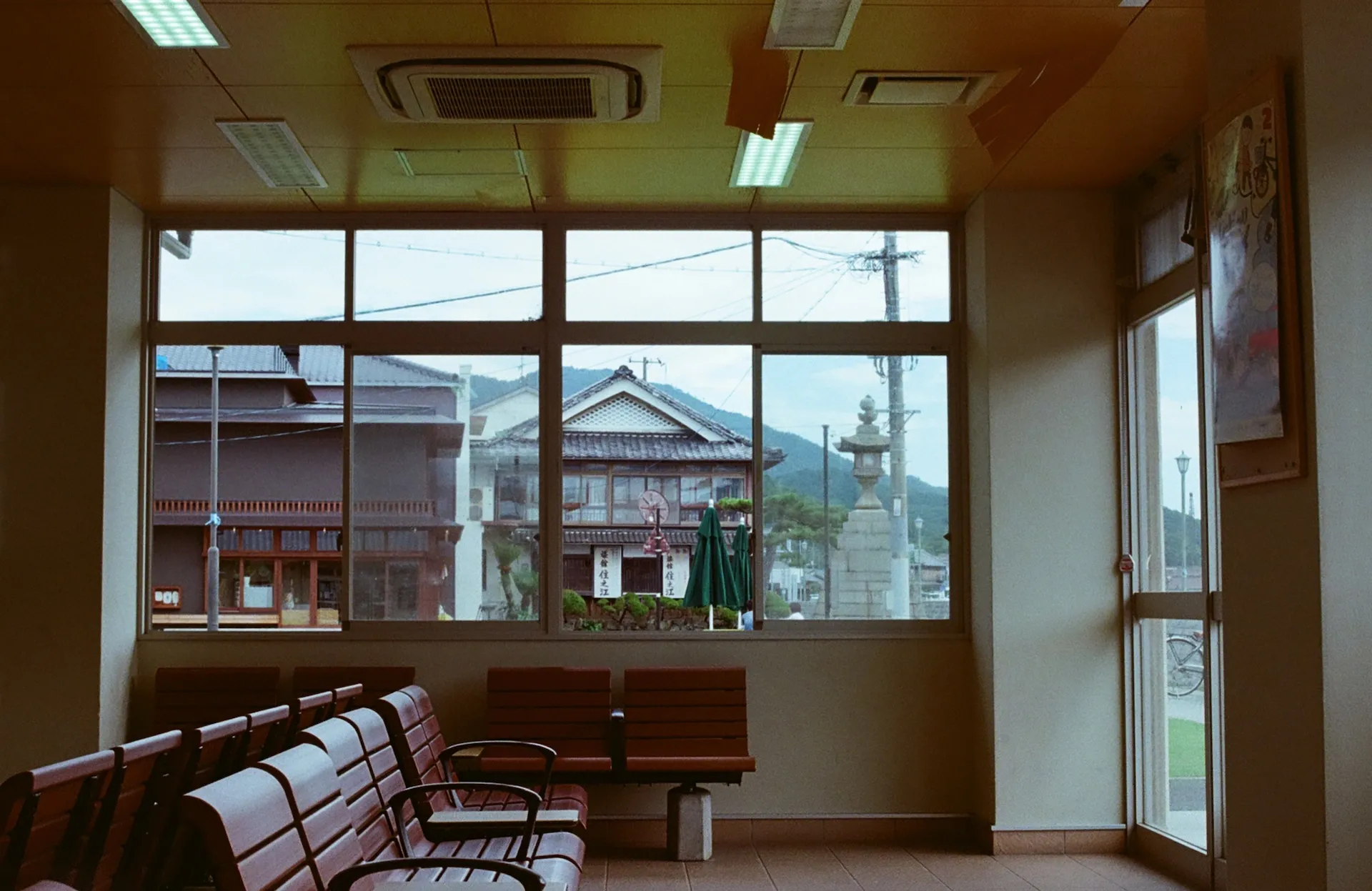
Setoda Port ferry terminal.
Contemplative Hiroshima
Our last destination was the city of Hiroshima, where we visited the Peace Memorial Park and Museum. It’s a place that I wish everyone could visit at least once.
Hiroshima is not just a reminder of tragedy. Honestly, it can be difficult to imagine it in ruins, as one walks through the bustling neighborhoods that thrive nowadays. The city spoke to me not only of devastation, but of the ability to rebuild and recover what was once destroyed. In fact, it was not the only place in Japan that felt like a testament to human resilience, with many of its temples and castles being replicas of those that perished to flames, natural disasters, or war.
Falling in love with a place
Both preparing for and returning from my first trip to Japan was oddly bittersweet.
Before arriving, I was a bit scared that my expectations had been set too high. I had been interested in the culture for a long time, so I had to prepare myself for the fact that it might not be that great. Fortunately, that was not the case.
Had I not had any other obligations, I would’ve probably stayed in Japan for far longer. Two weeks were not enough to experience everything that it had to offer. I wanted more of its underrated nature, its bustling streets and quiet train rides. The cute sounds that ATMs made, and the train station stamps that I collected in my notebook. I wanted to experience it all.
I had never really understood the people that say they’ve fallen in love with a place, but I think I might now.